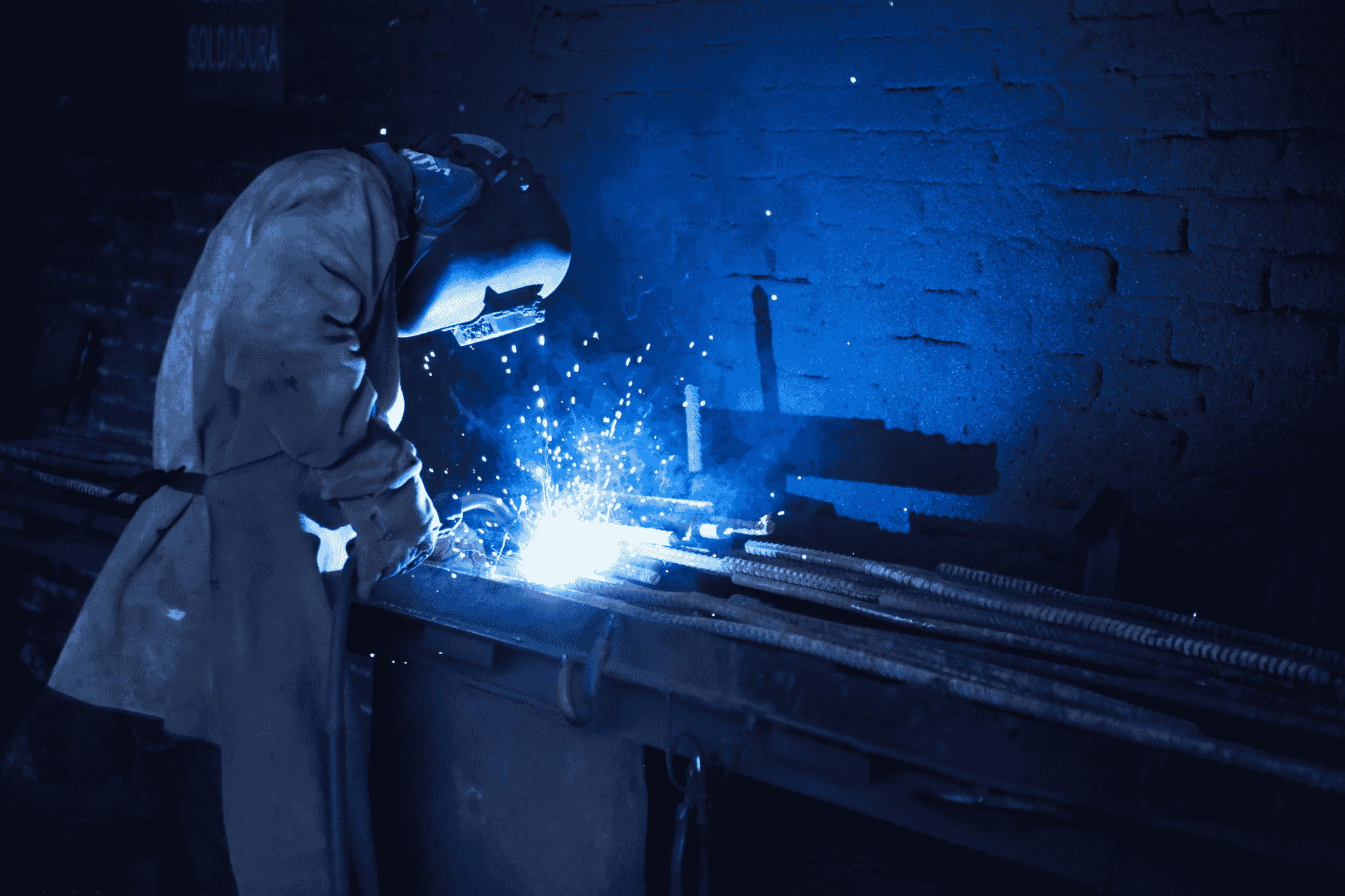

Skilled Trades Careers in Ontario Food and Beverage: Advice from 3 Pros
Last Updated on November 5, 2026
Want a hands-on career where every day is different? Then skilled trades might be the career path that you are looking for. The best way that you can learn what a job is like is by listening to people who are performing these jobs.
We partnered with CareersNOW! to bring you an interview with three skilled trades professionals: Alvin Alexander, Maintenance Mechanic at FGF Brands, and Alek and Lonny, both Maintenance Managers at Gay Lea Foods. In this mentorship session, they share how they got started, how to become a licensed millwright in Ontario, how to stand out by learning PLCs and controls, and what it takes to move into a leadership role.
Watch the full session below (and check out part two), or keep reading for the recap. Each section follows the questions they were asked!
Alvin Alexander, Maintenance Mechanic at FGF Brands
How He Got Started in Skilled Trades
Alvin grew up in Chandigarh, India, where he earned his mechanical engineering degree in 2010. Like many of his peers, he started in automotive manufacturing and completed an internship at MicroTurners (a major OEM parts supplier for Honda, Yamaha and Suzuki).
After the internship, Alvin was hired as a production engineer, working with the production, quality assurance, R&D and maintenance teams. He later joined Kone Elevators as a technical support engineer, where he handled complex technical issues and worked alongside field technicians.
Despite this experience, Alvin knew he wanted more, and in June 2016 he made the big decision to move to Canada.
What Was It Like Starting Over in Canada as an Engineer?
Like many newcomers, Alvin faced barriers breaking into his field. He took bridging courses, went back to college to strengthen his résumé, and accepted a range of survival jobs. One of those was as an order picker at Ingram Micro, which eventually led to a role testing Amazon returns.
A turning point came when a friend encouraged him to apply to FGF Brands, a tech-driven industrial bakery headquartered in Markham, Ontario. Alvin wasn’t familiar with food manufacturing, but he got the job and has been there ever since.
“I wasn’t 100% sure I’d get in, but I took the chance. I joined FGF in June 2017, and it changed everything.”
What Is a Skilled Trade—And Why Does It Matter?
Alvin defines skilled trades as hands-on careers requiring technical knowledge (often tied to equipment, manufacturing systems or infrastructure).
“It’s not just about turning wrenches. You need to understand the machines and the process. That knowledge makes you valuable.”
He also points out that skilled trades are in demand across industries. In his words: “No matter the sector, the first thing a company does is install equipment, and that’s where skilled trades come in.”
What Does an Entry Maintenance Mechanic Do?
When Alvin started at FGF, he had no direct food manufacturing experience. He entered at an entry-level mechanic position (similar to an apprenticeship), where he shadowed experienced tradespeople and learned on the job.
“My day-to-day was fixing machines, watching, asking questions, and building my confidence.”
— Alvin Alexander
After a year, Alvin was promoted to Level 1 Mechanic, which allowed him to work independently. He’s now a Level 2 Mechanic, handling more complex equipment and continuing to grow his skillset.
How Do You Become a Licensed Millwright in Ontario?
Alvin followed the experience-based route to trade certification in Ontario. There are three ways to enter the skilled trades:
- College training in a skilled trade
- Apprenticeship through an employer
- Challenging the certification based on hours worked and experience
Alvin chose the third path. After logging nearly 8,000 hours on the job at FGF, he’s now preparing to apply for his millwright license through Skilled Trades Ontario.
“Once you hit 8,000 hours, you can submit your experience and get your employer to validate your work. If approved, you’ll be eligible to write the certification exam.”
He encourages anyone following a similar route to keep their employer in the loop, so they can support your application or even start the licensing process on your behalf.
Why Choose Food Manufacturing?
When Alvin arrived in Canada, food manufacturing wasn’t on his radar as a starting point. That changed during the pandemic, when he noticed that food production kept going while many other industries shut down. He was working every day while others stayed home.
“This pandemic has taught us that being part of the food manufacturing industry is a very fruitful thing, even for new graduates.”
FGF Brands also offers co-op and internship programs, which give students and early-career professionals a way into skilled trades roles.
Alek, Maintenance Manager at Gay Lea Foods
What Does Gay Lea Foods Do?
Gay Lea Foods is a Canadian dairy cooperative with manufacturing facilities across the country. They produce a wide range of dairy products, including butter, whipped cream and milk powder.
Alek manages a team of 12 staff, including TSSA-certified power engineers, mechanics, technicians and a chief engineer.
How did Alvin become a Maintenance Manager?
Alek immigrated to Canada from Latvia and, like many newcomers, faced early challenges securing a professional engineering role. His first job was as a mechanic at Gracious Living, a manufacturer of plastic products like lawn chairs and traffic light housings (items you’d recognize from your local Canadian Tire).
There, Alek worked on injection moulding machines, which needed constant servicing because of their reliance on hydraulic oil. The work was hands-on and demanding, but it gave him critical experience with high-pressure mechanical systems.
After earning his millwright ticket, Alek moved into chemical manufacturing, servicing machines that produced laundry detergents, dish soaps and bar soaps. The environment wasn’t ideal (chemical processing can be messy and harsh), but it helped expand his mechanical knowledge.
His next step was a significant shift: he joined Unilever, working on food products under brands like Lipton and Knorr. This job introduced him to Good Manufacturing Practices (GMPs) and the cleaner, regulated environment of food production. While at Unilever, Alek got involved in continuous improvement initiatives, which positioned him for a supervisory role overseeing the same team he had worked alongside.
When Unilever relocated operations to the U.S., Alek pursued new opportunities and landed his current role as Maintenance Manager at Gay Lea Foods
How do you upgrade your mechanics career?
Alek encourages trades professionals to think beyond just the mechanical side of the job. In his view, one of the best ways to stand out is by developing skills in automation and controls.
“Get into controls and start learning PLCs and control circuits,” he says. “Once you add this to your portfolio, you can be one of the top technicians in the facility.”
In food and beverage processing, troubleshooting programmable logic controllers (PLCs) and electrical control systems is just as critical as maintaining mechanical equipment. Alek emphasizes that this dual expertise can make you indispensable:
“You won’t just be the guy who does the mechanical work, you’ll be the one who can troubleshoot and fix controls, too. You’ll be like a one-man team who can get the entire packaging or processing line back up and running.”
Lonny, Maintenance Manager at Gay Lea Foods
How Did You Get Into the Skilled Trades?
Lonny always knew he wanted to work with his hands. After high school, he enrolled in a general machinist program, but quickly found the repetitive nature of the work unfulfilling. He pivoted into a production role at Bendel Automotive, where after just three months, the maintenance supervisor invited him to join the maintenance team.
Starting as a maintenance helper, Lonny performed preventative maintenance tasks like filter changes and greasing machines. He soon entered an apprenticeship program, but when the automotive sector began to slow down, he transitioned to Axiom Millwrighting and Fabrication, taking on part-time work that evolved into full-time employment.
At Axiom, he travelled across North America installing and modifying production lines for major manufacturers like Pepsi and Royal Command. One of these projects brought him to Gay Lea Foods, where he helped install a whipped cream production line. At the time, Gay Lea was looking for a night shift mechanic. Given his experience with the equipment, Lonny was hired on contract—and never left. Fourteen years later, he now serves as Maintenance Manager and Chief Operating Engineer.
What Do You Love About Your Job?
“It’s different every single day. You never know what you’re going to get. You get the challenge your mind, you get to really work your brain and figure things out.”
Lonny enjoys the challenge of troubleshooting, solving equipment problems and seeing immediate results. One of the most satisfying parts of his job is fixing equipment that others struggle with and watching it run perfectly again. That sense of accomplishment keeps the work engaging and rewarding.
What Are Your Responsibilities as a Maintenance Manager?
- Leading capital projects (for example, replacing one boiler and rebuilding two others)
- Overseeing a skilled team of mechanics and engineers
- Managing the maintenance department’s budget and cost centres
- Improving facility operations through strategic upgrades
- Supporting team development and career progression
Did You Need Special Training to Become a Manager?
Lonny took part in Gay Lea’s “Lighthouse Program”, a leadership initiative designed to promote from within. The program gave him the management and communication skills he needed to move into a leadership role.
Lonny believes maintenance managers have one of the most difficult roles in a facility: “You have to keep everybody happy. You’ve got production demands, quality demands. You got budgets to worry about parts on the shelf as opposed to just worrying about what’s going out the door from a production standpoint. It’s a balancing act for sure. Making sure everybody stays happy.”
Want to Hear From More Skilled Trades Professionals?
Skilled trades keep food and beverage plants running, and there’s more than one way in! Check out Part II of the Mentorship Series to hear from more skilled trades professionals and learn about other roles in the industry. You can also explore [food and beverage skilled trades jobs](link to job board) on the FoodGrads Job Board.

leave your comment