

8 Facts about Material Planners
Last Updated on May 16, 2026
Think back to a time you had to pull together a big project at school.
You had to track down everything you needed. The right materials. The right tools. Maybe you were building a poster board, trying to make it stand out, hunting for something unique to bring it together. Or maybe you found yourself following a recipe and realized halfway through that you are missing an ingredient. That’s never fun.
Scale that feeling up to a factory producing thousands of units a day, and you start to understand why food manufactures producers hire professionals whose job is to focus one getting everything that production needs.
They’re responsible for tracking down and ordering materials for production runs—so everything arrives at the right place, at the right time, and in the right quantity.
These professionals are material planners.
1. Material Planners manage the flow of raw and packaging materials
Material planners are professionals who ensure that a food manufacturing facility has the materials it needs to keep production running. They review material requirements, place orders with suppliers and track incoming deliveries to make sure everything arrives on time. They also monitor inventory levels and prepare reports on material usage, yield and productivity to support decision making across the business.
These professionals rely on software systems (such as SAP and MRP) to manage the flow of materials and keep accurate records across the entire operation. They also work closely with a wide range of teams (from warehouse staff to procurement and production) to make sure materials are always available to keep the production line running smoothly.
Think of it like meal prepping on a massive scale. You need to know what ingredients you have, what you are going to cook and when you need to go shopping. A material planner does exactly this, just for an entire factory running around the clock!
2. Material planners rely on specialized software to do the job
Material planners rely on software systems called ERP (Enterprise Resource Planning) systems to manage the flow of materials. These are large software programs that connect different parts of a business, from purchasing to production to warehousing, all in one place. SAP is one of the most widely used ERP systems in the food manufacturing industry.
Within these systems, planners also use MRP (Material Requirements Planning) to calculate exactly what materials are needed and when. For example, if a factory is scheduled to produce 10,000 chocolate chip cookies next week, the MRP system works backwards to figure out exactly how much flour, sugar, chocolate chips and packaging is needed, and when it all needs to arrive!
Through this software, material planners are able to:
- Place orders with suppliers
- Track incoming deliveries
- Run daily reports that give a clear picture of what is happening across the supply chain
Proficiency in Excel is also important, as planners regularly use spreadsheets to analyze data and track performance. Being comfortable with technology and data is a big part of this job!
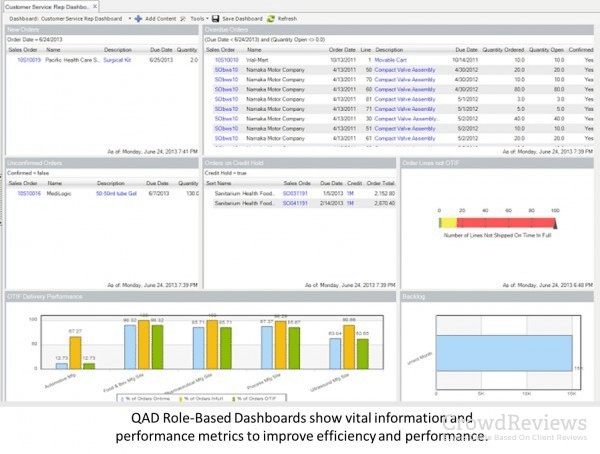
Example of an ERP Dashboard
3. Material Planners typically hold a degree in supply chain or a related field
The typical educational background is a degree in supply chain management, logistics, business, or operations. Some employers will also consider candidates with an engineering background.
Beyond a degree, practical hands-on experience is very important to employers. Most job postings ask for two to five years of experience working in a manufacturing or planning role. There are also professional certifications available, such as those offered through APICS (a globally recognized supply chain association), that can help candidates stand out and advance their careers.
4. A big part of a material planner’s job is managing supplier relationships
Material planners work closely with the suppliers who provide the raw and packaging materials that keep production running. The reason for this close relationship is because these professionals need to ensure that deliveries to the production facility are on track. Material planners share forecasts with suppliers so they know what quantities are needed and when. They also monitor incoming deliveries on a daily basis to make sure materials arrive on time and in the right amounts.
When things don’t go as planned (and in manufacturing, they sometimes don’t!), material planners step in to resolve the issue. This might mean contacting a supplier directly to fast-track a delayed delivery, or reaching out to push a delivery back if the production schedule changes. Following up with suppliers to ensure delivery commitments are met and catching any issues early.

5. Material Planners are responsible for reporting and managing stock accuracy
Material planners love working with data. They take raw numbers and turn them into reports that give the wider organization a clear picture of what is happening across the operation. From daily summaries to monthly deep-dives, these reports track material usage, yield and productivity. Analyzing this data also helps planners spot trends, identify inefficiencies and find opportunities for continuous improvement.
However, material planners also need to verify that what is recorded in the system matches what is physically sitting in the warehouse. If the system says 500 bags of flour are on hand but a physical count comes back at 300, that discrepancy could cause a production shortage nobody saw coming. Catching that gap and resolving it quickly is a critical part of the job.
This means close, ongoing communication with warehouse managers and operations staff. The data in the system is only useful if it reflects reality.
6. Material Planners are responsible for optimizing their factory’s inventory
Inventory refers to the stock of materials a company has on hand at any given time. Too much and you have money sitting in a warehouse full of materials that risk expiring – which in food manufacturing is a genuine food safety concern, not just a cost issue.
Material planners use a few key strategies to stay in that zone:
- Adjusting how frequently orders are placed based on how long it takes for materials to arrive
- Keeping stock levels within a safe range — not too high, not too low
- Using data to spot patterns and find smarter ways to manage materials
When inventory is managed well, it is almost invisible. When it is not, everyone notices.

7. Material Planners collaborate across many departments
On any given day, a material planner might call a supplier to confirm a delivery, meet with the production team to discuss next week’s schedule, and send an update to the purchasing department about a potential shortage – all before lunch.
A material planner needs to communicate clearly with a wide range of people, from warehouse staff on the factory floor to managers making high-level business decisions. Understanding how to communicate the same message to different people in different ways is essential for success in this role.
8. The skills that make a great material planner are analytical thinking, organization, and communication
As with any occupation, there are certain sets of skills which will aid you better than others. For a Materials Planner these skills include:
- Analytical thinking: Material planners work with a lot of data every day. They need to be comfortable reviewing reports, spotting patterns and making decisions based on numbers. Strong Excel skills are considered a baseline requirement for this role.
- Organization: With dozens of materials, suppliers and delivery dates to track at any given time, a material planner needs to develop strong organizational habits. This means consistently updating spreadsheets, logs and system records so that the status of every order and material is always current and accurate. A planner who lets this slip will quickly lose visibility over what is happening and won’t be able to catch problems before they affect production!
- Communication: Material planners interact with a wide range of people and departments very single day. Whether they are updating a manager on a supply risk or negotiating a faster delivery with a supplier, getting their message across clearly and confidently is a core part of the job.

leave your comment